




Protecting your liver health and understanding MASLD
Protecting your liver health
It is estimated that 1 in every 3 people globally have early stages of metabolic dysfunction-associated steatotic liver disease (MASLD), where there are small amounts of fat in their liver.
The liver, our largest solid organ, performs over five hundred functions, including processing digested food from the intestine and converting this into energy, neutralising drugs and toxins and fighting infections in the body.
Often referred to as a 'silent' disease, MASLD displays minimal symptoms in its early stages. Early diagnosis is crucial, as the liver has the ability to regenerate itself with lifestyle changes or medication before severe damage occurs.
You may previously have seen this condition referred to as non-alcoholic fatty liver disease, or NAFLD. This was traditionally diagnosed when excess fat was seen in the liver and was not thought to be primarily related to alcohol. In 2023, an international group of liver specialists introduced the updated term metabolic dysfunction-associated steatotic liver disease, or MASLD, to better reflect the role of metabolic health in the condition.
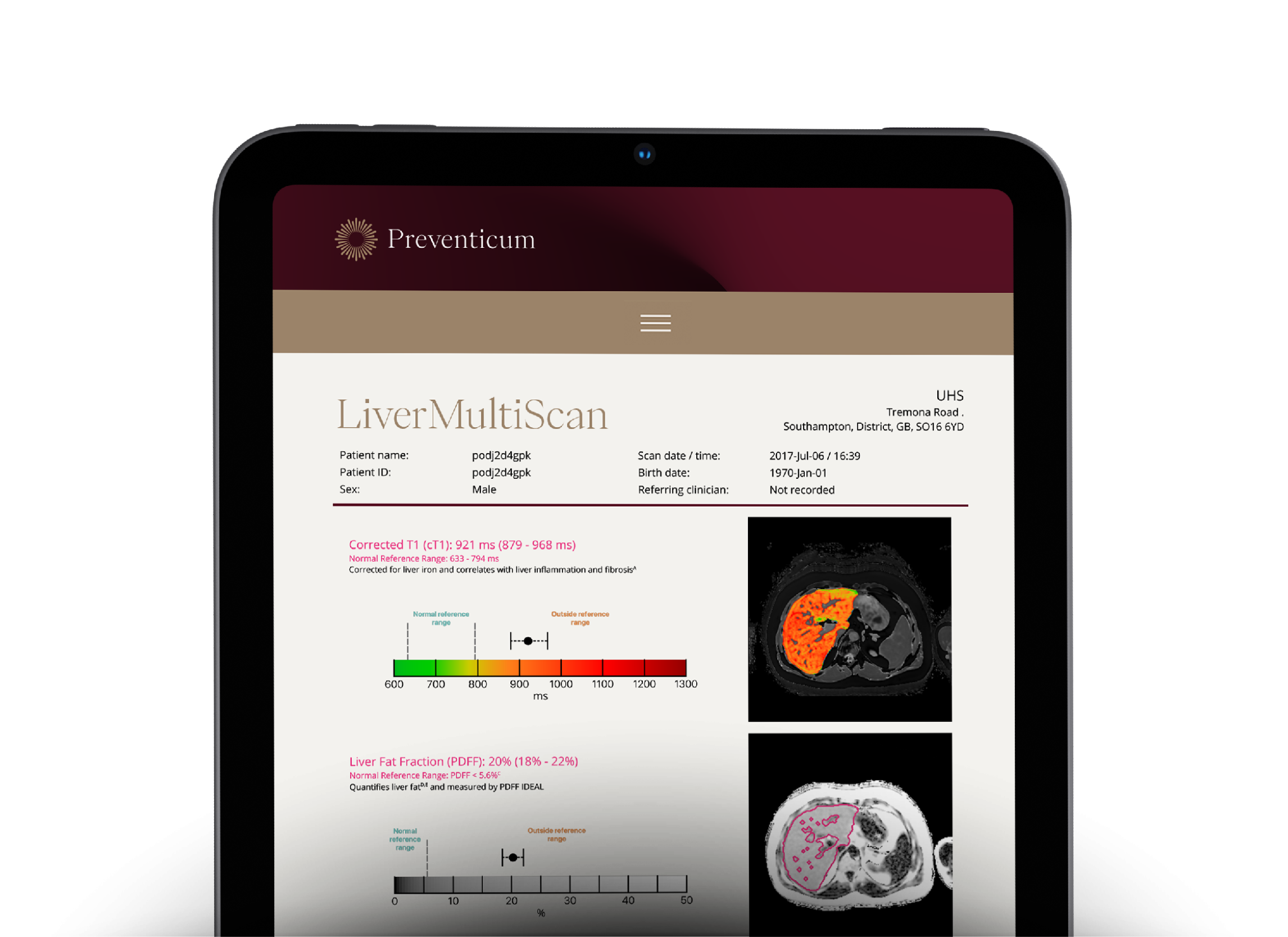
At Preventicum, we evaluate your liver health using a combination of liver function blood tests, ultrasound and detailed consultations with your Preventicum Doctor. Our Optimal and Ultimate Assessments include LiverMultiScan, an advanced MRI scan that provides detailed measures of fat, inflammation, fibrosis and iron in the liver.
What is MASLD?
MASLD is the most common cause of abnormal liver blood test results in the UK and it is estimated that one in every three people are in the early stages of MASLD. Prevalence increases with age, particularly in men aged 40 to 65 years.
A diagnosis of MASLD refers to excess fat in the liver that occurs in the presence of at least one feature of metabolic health risk. These include increased waist circumference or BMI, raised blood sugar or type 2 diabetes, high blood pressure, raised triglycerides, or lower levels of HDL cholesterol. This terminology helps highlight the metabolic factors that can contribute to liver fat, rather than describing the condition mainly by the absence of alcohol-related liver disease as was the case with the previous term NAFLD.
Early detection of MASLD matters because it can be a marker of wider cardio metabolic health, not just liver health. The same metabolic factors that contribute to liver fat, including raised blood sugar, high blood pressure, abnormal blood fats and increased waist circumference or BMI, can also increase the risk of heart disease, stroke, type 2 diabetes, chronic kidney disease and some cancers. If left unaddressed, MASLD can progress to liver inflammation, scarring and cirrhosis, and in some cases may lead to liver cancer or liver failure. This is why early identification provides an important opportunity to reduce future health risk.
In 2025, 10% of our clients had evidence of fatty liver disease. Early-stage MASLD may not cause noticeable symptoms, but as the condition progresses, individuals may experience fatigue, abdominal discomfort and other signs of liver dysfunction.
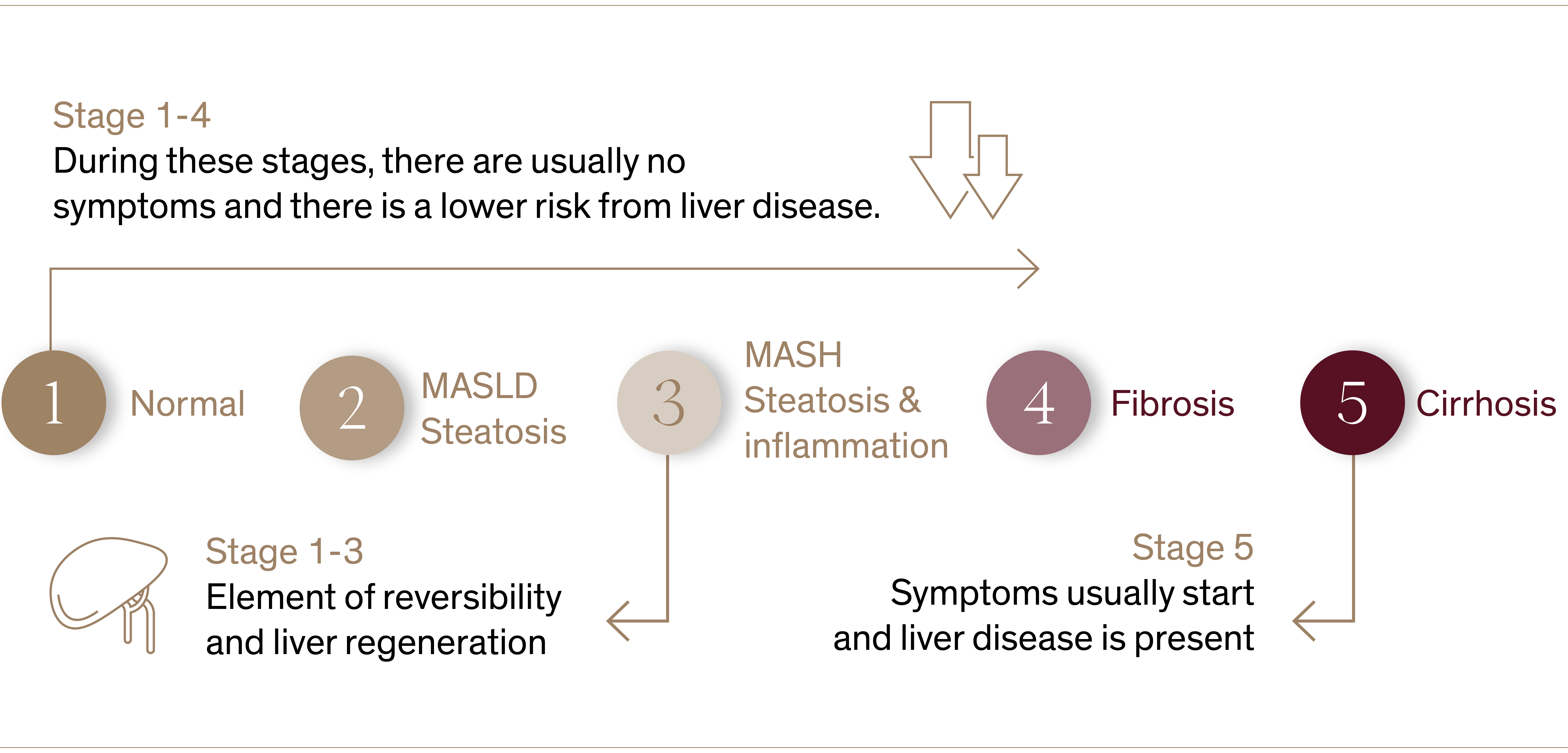
What are the stages of MASLD?
Metabolic dysfunction-associated steatotic liver (steatosis):
- Fat accumulates in liver cells (more than 5% of the liver’s weight) without inflammation or scarring.
- Lifestyle changes can improve this stage.
Metabolic dysfunction-associated steatohepatitis (MASH):
- This is a more serious stage where the fat triggers inflammation and liver cell injury which can cause swelling and scarring of the liver. This is estimated to affect up to 5% of the UK population.
Fibrosis:
- Where persistent inflammation causes scarring which stiffens the liver and reduces its ability to function properly.
- In the early stages, mild fibrosis may be partially reversible.
Cirrhosis:
- This is the last stage of fibrosis where large parts of the liver have become damaged and scarred. It is usually the result of long-term, continuous damage to the liver.
- Whilst some damage may be repaired the liver may no longer have healthy cells to support normal functions.
- Complete liver failure and liver cancer can occur.
Who is at risk of MASLD?
You are at increased risk if you:
- Are obese or overweight, particularly with increased waist fat.
- Have type 2 diabetes, high blood pressure or hyper lipidaemia.
- Follow a poor diet and do little or no exercise.
- Are a smoker.
- Have insulin resistance, polycystic ovaries or are over 50.
However, MASLD has been diagnosed in people without these risk factors, including young children.
Symptoms of MASLD
In the early stages of MASLD, individuals may not experience noticeable symptoms because the fat accumulation in the liver itself does not cause direct damage. It is often diagnosed incidentally during tests and health assessments.
Symptoms including tiredness and discomfort in the liver area are not common in the early stages of MASLD but may occur if the disease progresses to a more advanced stage, such as MASH or cirrhosis.
Regular health assessments are crucial for early detection and intervention, especially for individuals at risk, such as those who are overweight or have certain medical conditions such as diabetes or metabolic syndrome. By identifying MASLD early, lifestyle modifications and appropriate medical management can be implemented to prevent or slow down disease progression and reduce the risk of complications.
Symptoms of MASH, fibrosis or cirrhosis
- A dull or aching pain in the top right of the abdomen (over the lower right side of the ribs).
- Fatigue (extreme tiredness).
- Unexplained weight loss.
- Yellowness of the eyes and skin (jaundice).
- Bruising easily.
- Vomiting blood.
- Dark black, tarry faeces.
- Periods of confusion or poor memory.
- Itching skin.
- Swelling in the legs, ankles, feet or abdomen.
Diagnosis
Our advanced LiverMultiScan accurately assesses for early signs of liver disease and quantifies liver fat content. If a higher than normal liver fat percentage is noted alongside one any other indicators, a diagnosis of MASLD can be made.
Once a diagnosis of MASLD has been confirmed, your Preventicum Doctor can discuss personalised advice on reversing this condition. Trend analysis over multiple Preventicum assessments provides clear information about liver health and the responses to these implemented lifestyle adaptations.
Where there is concern about risk of liver fibrosis, you may be sent to a liver specialist (hepatologist) for disease staging and in some cases, you may also need a liver biopsy where a small sample of liver tissue is taken using a very fine needle for analysis in a laboratory.
Treatment
There is no specific treatment for MASLD, but early identification is key to avoid progression and the associated risks of liver disease, cardiovascular disease and cancer. There are many medications to manage the conditions associated with MASLD such as high cholesterol and type 2 diabetes. There is growing interest in the use of GLP-1 agonists (weight loss medications) for treating MASLD.
Prevention
Adopting a healthy lifestyle is the primary method of preventing and managing MASLD. There is robust evidence that gradual weight loss through a healthy, balanced diet with increased exercise can reduce the amount of fat in the liver as well as helping with associated conditions such as high blood pressure, diabetes and cholesterol.
- Reduce your intake of sugary foods and drinks.
- Opt for wholegrain carbohydrates which are high in fibre and have a low glycaemic index. These are also associated with a 30% reduction in risk of heart disease, stroke and type 2 diabetes.
- Increase your consumption of vegetables and fruit.
- Reduce your consumption of saturated fat which lowers heart disease risk.
- Moderate and monitor your portion sizes.
- Exercise regularly and aim for a minimum of 150 minutes of moderately vigorous or 75 minutes of vigorous aerobic exercise every week.
- Smoking cessation. Smoking can increase the severity of liver damage and cessation can help reduce your risk of problems such as heart attacks and strokes.
- Reduce your alcohol consumption. Although MASLD is not caused by alcohol, when it is diagnosed in the context of increased levels of alcohol intake, the condition is classified as Metabolic Alcohol related Liver disease (MetALD) so drinking more than the recommended amount may make the condition worse given alcohol is processed by your liver.
References
NHS Website
Liver UK - Metabolic dysfunction-associated steatotic liver disease (MASLAD)
British Dietetic Association
NICE CKS guidelines of Metabolic Dysfunction-Associated Steatotic Liver Disease (formerly Non-Alcoholic Fatty Liver Disease)
Other References
A multisociety Delphi consensus statement on new... : Hepatology
Glucagon-like peptide-1 receptor agonists improve metabolic dysfunction-associated steatotic liver disease outcomes | Scientific Reports